Asthma is a chronic lung condition that affects the airways and can make breathing difficult. Common symptoms include wheezing, shortness of breath, chest tightness, and coughing, which may come and go and vary in severity. Symptoms are often triggered by allergies, respiratory infections, exercise, cold air, or environmental irritants and usually improve with treatment.
Asthma occurs when the airways become inflamed and narrowed, making it harder for air to move in and out of the lungs. Many patients have symptom-free periods between flare-ups, and asthma is frequently associated with allergies. Asthma is diagnosed based on symptoms, medical history, and breathing tests (generally appropriate for individuals >5 yrs old) that measure how well the lungs are working. With proper evaluation, monitoring, and individualized treatment, most patients can manage asthma effectively and maintain an active, healthy lifestyle.
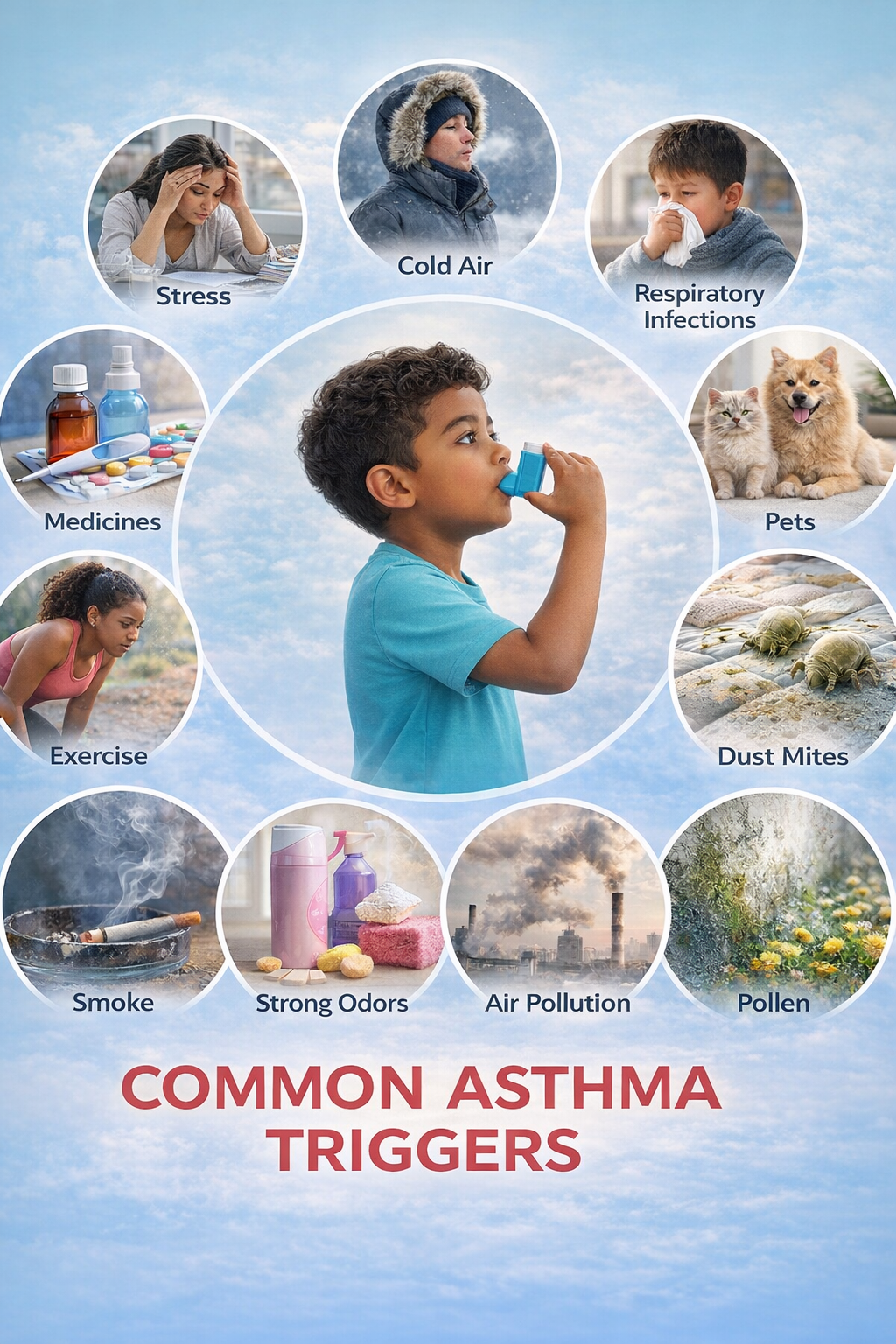 |
Characteristics of Asthma
- Episodes of wheezing, coughing, chest tightness, and shortness of breath
- Airway narrowing that makes it harder to move air in and out of the lungs
- Inflammation and swelling of the airway lining
- Tightening of the muscles around the airways
- Increased mucus production in the airways
- Symptoms that may worsen at night or early in the morning
- Triggers such as allergies, exercise, respiratory infections, cold air, or irritants
- Periods of well-controlled or symptom-free breathing between flare-ups
- Often associated with allergies or a family history of allergic condition
How Asthma Is Treated
- Identification and avoidance of asthma triggers when possible
- Quick-relief inhalers (rescue medications) to open airways during symptoms
- Daily controller medications to reduce airway inflammation
- Inhaled corticosteroids to help prevent flare-ups
- Long-acting bronchodilators when needed for ongoing symptom control
- Allergy management, including testing or immunotherapy when appropriate
- Asthma action plans tailored to each patient
- Regular follow-up visits to monitor control and adjust treatment
|
| |
|